Mumbai – Mani Bhavan

Mani Bhavan is one of India’s important Gandhi memorial museums and a house where he lived from 1917 to 1937. The middle balcony opens into the room where he lived and worked and is the site where he often prayed. The second photo shows the simple interior of that room preserved as it was when he lived there. The bookcase in the back contains three volumes, the Bible, the Koran, and the Bhagavad Gita. Gandhi learned to spin while here and part of his famous spinning wheel is shown in the back. It was here that he started his historic fast on November 19, 1921 to restore peace after violence accompanied the visit of the Prince of Wales.

Twenty-eight dioramas that depict famous scenes from his life fill the room next door. The detail of the miniatures is amazing. I photographed them all as we had so little time here and there was so much to read, see, and feel. All over the walls were copies of his writings and sayings. One framed exhibit showed letters to Hitler and FDR. The letter to Hitler, written in July, 1939 implored him to refrain from starting a war, saying nothing was worth the cost. No one knows if Hitler read it, but everyone knows he did not heed it. The letter to FDR asked that he support India’s effort for independence from Great Britain, which occurred in 1947. A library with over 50,000 volumes contains Gandhi’s books and books on his thought. A children’s section had a book on Lincoln prominently displayed.

In a quiet section of the library, I sat a moment and offered a prayer in gratitude for people like Gandhi and in petition that I be more like him. I may not visit Bombay again, but I am better for having been in this place and the world is better that he lived in it.

Bombay, India

Bombay or Mumbai as they call it in Hindi is a seven island city of sixteen million inhabitants. Across a bridge the mainland city, called New Bombay, has four million more. It is India’s largest port, its commercial and industrial center, its fashion center, and the heart of Bollywood, India’s movie industry. It has a bit of all of India’s diverse cultures.

The first photo shows the Gateway of India, Bombay’s most famous monument. It was built as a triumphal arch to commemorate the visit of King George V and Queen Mary in 1911, but it was also the site from which the last British ship sailed when India achieved independence in 1947. As we drove about the city, we passed dozens of beautiful, stone, colonial buildings like those at the University of Bombay as well as modern sky scrapers like the luxurious Taj Mahal Hotel. To show the diversity though Sandy and I passed on the opportunity to see it, Dharavi is a slum area where three-hundred thousand to a million people live and work at cottage industries and recycling which bring in equivalent to five-hundred million dollars.

As a demonstration of the contrasts in this city, the last photo shows Dhoby Ghat, the largest traditional laundry in India in the foreground with modern skyscrapers behind. A ghat is a traditional laundry where clothes are steamed in water, beaten on flogging stones to remove dirt, placed in big vats of starch, hung out to dry, and then ironed. I suspect the Cafe Royal, where we enjoyed a buffet lunch of Indian dishes, uses this laundry for its napkins. They were starched so stiff they laid on your lap like a piece of cardboard, but there were no wrinkles. More on Bombay tomorrow.

Cochin or Kochi, India

Westerners call it Cochin, but the locals call this city Kochi. Located on the southwest corner of the Indian peninsula and part of the state of Kerala, Cochin is a busy port, center for Keralan art, and a center of communications and industry. The guide claimed that one-hundred percent of the people are literate. Kerala has one of the longest living populations in the world, and Sandy recalled that Kerala was excluded from Indian statistics on health care because it was such an outlier.

First, we visited the Chinese fishing nets, a legacy of the past. The nets are set up on teak and bamboo poles, and were brought by one of the first visitors. The nets are still used, though not while we were there at low tide. They are surrounded by an active, open fish market.

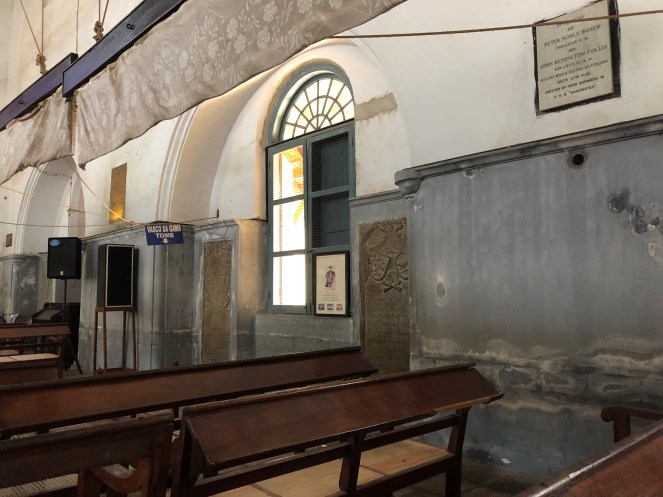
After the fish market we visited a Jewish synagogue, built in 1568 and decorated by original Chinese tiles and Belgian chandeliers. It is the oldest synagogue in the Commonwealth of Nations. The synagogue is near where one of the early kings lived as the Jews were brought to the area to be under his protection. Vasco de Gama came to Cochin on three occasions and died here on the third visit. He was buried in St. Francis church for two years before his remains were taken back to Portugal. The last photo shows the site of his burial inside St. Francis Church which was built in 1503 and is the oldest Christian church in India. St. Francis was originally Catholic, then it became Anglican, and now it is an active Church of India congregation.

Komodo Island

Beginning with Komodo Island, Indonesia, I had terrible internet problems. I spent hours trying to upload photos and post the blog, only to have it all fail. These creatures are so amazing, I was not willing to do that post without photos. So here it is, Komodo a bit late. This was the first day I took my walking stick. I had been told that it really helps to lean on the stick if you can’t sit. Also, I thought it could be used as a weapon if a Komodo dragon came after me. They told us the island was dangerous and the guides used pitiful forked sticks, smaller than my walking stick to protect the tourists. Apparently, in the past one guide spent months in the hospital from a bite.

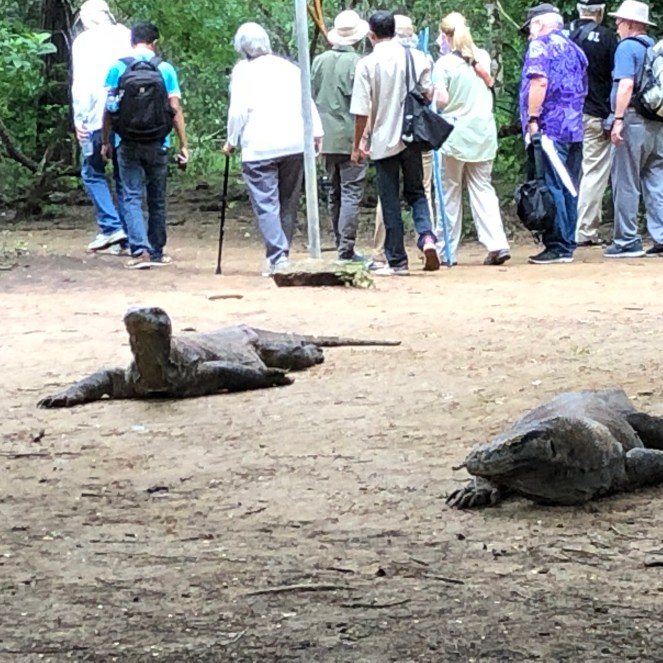
Komodo dragons are the most prehistoric of creatures living today. They look it. They are a type of monitor lizard. There are about three thousand living on several Indonesian islands, most on the island that bears their name. They are awesome predators, capable of running twenty to thirty miles per hour. They have venomous bites that cause their prey to bleed to death. Deer have been introduced to the island to feed them.

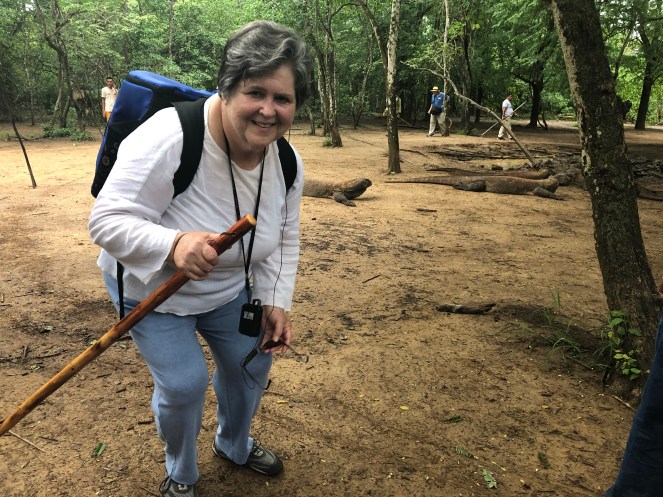
Lest you think I am too brave, since the last photo shows me rather close to four of them, rumor has it that visitors are taken to a Komodo dragon senior citizens area that is relatively safe. Of course, the island has thousands of others that are free to wander in to the area. We saw nine, some of which never moved, making me wonder if they were given anesthesia in some way, but one was said to be a juvenile and he moved into some tall grass behind where we were standing. He would not be in a senior center! The night before we went to Komodo, Asep, the head of the dining room who is from Indonesia, told us to stay on the path. We did.

Sri Lanka-Tuk-Tuks, Tea, and Temples

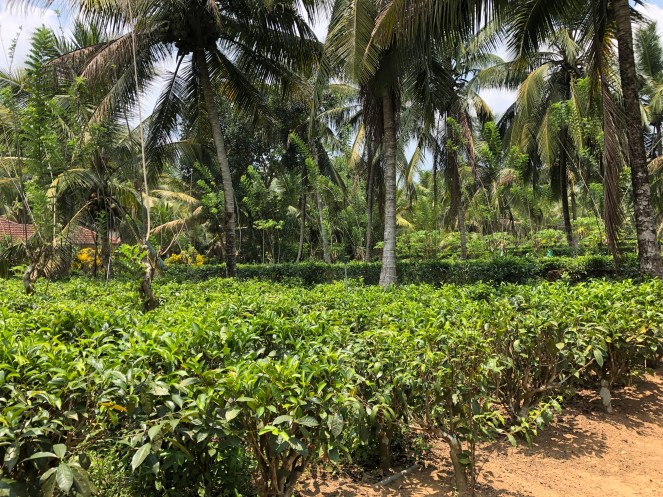
Thousands of tuk-tuks, a three wheeled vehicle that carries two visitors (the legal limit) or whole families, travel the city streets and village lanes of Sri Lanka. As part of our experience, we rode about ten miles in a tuk-tuk to the base farm of Sri Lanka’s master farmer. There we saw tea fields, banana patches, coconut trees, cinnamon trees, pineapple patches, rubber trees, mango trees, star fruit trees, and many more plants I can’t even remember.

As I stood beside this tea field, I watch a man climb a coconut tree and tap the flower for milk. He lowered the gourd on a rope; they poured the milk in a pitcher, and we all drank some from coconut shell cups. Later, we learned that cinnamon trees live for a hundred years and we watched as the same farm worker showed us how cinnamon bark is prepared. It has to be done by hand and is a labor intensive process, no wonder cinnamon is expensive. We saw the process for tapping rubber trees and how the raw rubber is made into sheet so it can be saved at least a year to get the best price. Raw rubber has to be sold immediately at whatever price. We saw countless uses for different parts of the coconut, including the making of coconut oil. Finally, we ate a fabulous lunch, prepared by the farmer’s mother from products mostly grown on that farm. I can’t begin to tell you all we learned about products we use every day. It takes the rubber tapped from a tree for two years to make one tire.

Almost seventy percent of the Sri Lankan population are Buddhist; seven percent each are Hindu and Muslim, and six percent are Christian. We visited the Buddhist temple shown in the photograph. Inside we saw a large Buddha, reclining with an altar where we could leave flowers. We had to cover shoulders and ankles and take off our shoes. This temple is six or seven hundred years old. Back at the part most of us bought saris for the next gala. Now I have to learn how to drape it and what to wear underneath. Also, I want Jane Anderson to know that I bought her some tea. While it was very hot, I think our time in Sri Lanka, formerly Ceylon, was one of our best days.

The Haka Waka

About a month ago, one line in the daily schedule of events said the sign-up for the shipbuilding contest was the next morning. Captain Sandy signed us up. Since then in our spare time, we have been building a Maori themed catamaran, loosely like the one in the movie, Moana. The rules were that it had to float, it had to carry at least a pound of cargo, we could not use ship’s linen, and a panel of judges would evaluate for creativity. Haka is the Maori word for warrior and waka is the word for ship, so we called our ship the Haka Waka. Today was judgement day.

Just before we started on the ship, Sandy attended a lecture by the compliance officer where she learned that the hats that are used for gala nights create the most non-re-cyclable waste. We decided to make our ship out of used hats and at least re-cycle them once. The floatation devices in the black bags beneath the deck are six derby hats. The deck is made from straw hats that I took apart. The sail is made from a used paper bag and masking tape. Wan, our wonderful cabin steward, helped in a number of ways, getting us lumber for the deck frame and three different kinds of tape and drilling holes for me to use for the mast and rudder. A number of our Road Scholar participants helped get us supples. I made all of the rope out of used yarn from the Linus project. I learned to crochet and practiced on this yarn so it was used. (The Linus project makes blankets for terminally ill children. Now that I have learned on their yarn, I am making a crocheted blanket for the project.) We used a wine bottle for the keel and made the mast from chopsticks. I made an anchor, rope ladder, and multiple cleats. The boom actually moved from side to side as did the rudder. The head of the dining room gave us flowers.

Because it was too large to take through the door in our room once the mast was put in place, final assembly took place this morning on the pool deck. The compliance officer came by and loved it. At one o’clock, our Road Scholar lecturer took a twenty minute break so our group could see that the Haka Waka floated perfectly. Then, six coke cans were added and she stayed up. Finally, the pool pump was turned up and she handled rough seas. We scored thirty out of thirty points, winning by half a point over our chief competitor, a container ship, called Spice Girls. At dinner tonight Sumer, our waiter, had a cake made for us to celebrate our win. It was a fun day at sea. Tomorrow we are off to Sri Lanka and I am back to writing about our amazing world.

Singapore, Singapore

We’ve just left Singapore, a city, state, country, and island. It is the world’s second largest seaport next to Shanghai and home to 5.8 million people. In 2015, it was the world’s largest container shipping port and the world’s largest bunkering (oil storage) port. A ship enters or leaves the port every two to three minutes. Twenty-five percent of the land is reclaimed from the sea. The total area of the country is about 700 square miles. They have no land, no resources, no water; what they do have is strategic location and very effective government.

One very interesting part of our visit to Singapore was a visit to the urban planning center gallery, which just opened a few days ago. They have made a fifty year plan with four goals in mind, economic growth, better quality of life for all, preservation of heritage, and optimizing use of the land and sea. Then they built a high tech, interactive center to educate the people, especially the children, and to insure that they will buy into the plan. According to our guide, who is Singaporean and clearly loves her home, that is the Singapore way. In the satellite photo, lower left corner, the brown buildings with no windows indicate buildings that will be built on reclaimed land.

There seems to be a price for this progress and that is personal freedom. You get fined for chewing gum, smoking in public, littering, and many other things. The penalty for dealing drugs is death. On the way into port, we passed a sign with two figures of men, one aiming a rifle at the other with his hands up. We assumed the offense was drugs but we couldn’t read the small print. I’ve never seen a sign like that. Singapore, I could have a love-hate relationship with this place!

Java

Wednesday morning at 7:00 AM we left with a police escort for a two-and-a-half hour ride to Borobudur, the largest Buddhist temple in the world, shown in the first photograph. Built in the ninth century CE, Borobudur is surrounded by active volcanoes and was covered with volcanic ash for centuries before it was restored in the late 1800s. An active volcano is faintly visible in the clouds between the tree and the south east corner of the temple in the second photo. A pyramidal structure, the temple has 10 levels each representing a step toward Nirvana, the highest level of human existence. The highest level of the temple is called the Stupa and represents Nirvana. Five hundred and four statues of Buddha adorn the outer walls.

Visitors can climb to the Stupa level, but I did not reach Nirvana. The inner walls of the second and most interesting level are covered with stone carvings which tell the story of Prince Siddhartha who became the Buddha. One of these stories in shown with our guide in the third photo.

We traveled over an interstate type highway for half of the trip to Borobudur. Along the way we saw several active volcanoes surrounded by tropical rain forest, several wet rice paddies, and a large number of mosques. Eighty-five percent of the people in Java are Muslim. The second half of the trip was over a narrow road where the police escort would stop the local traffic and the tour buses would fly down the middle of the road. Our guide said the people are not thrilled with this, but they understand the importance of tourism to their economy and they know that Borobudur, a UNESCO World Heritage Site, would be out of reach for cruise ship passengers without this process. The trip would just take too long. After visiting the temple we had a buffet lunch of typical Indonesian cuisine at a beautiful hotel in sight of the temple. It was another interesting, informative day. I am a bit behind with my posts due to internet difficulties but will try to catch up in the next three days.

Bali

““

  • Yesterday in Bali, I watched this one of hundreds of Macaque monkeys eating an orange in the Monkey Forest. They roamed freely around us, jumping on some shoulders and diving in the swimming pool when a group appeared to watch. Dozens of babies played with siblings or nursed. Our guide said they use birth control, but it did not appear to be working. We were told not to carry plastic bags and not to make eye contact. Some of their expressions were particularly prescient.
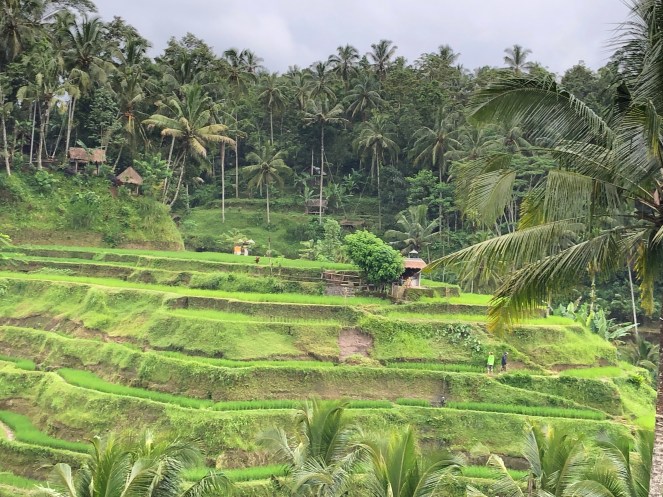
  • The terraced rice paddies, seen in the second photo, formed the view from the open patio where we had lunch. They were available for walking for a closer look, but I declined that. I learned that rice does not require being submerged in water to grow. The fields can be dry as these were. Apparently, the water is to eliminate pests that eat the tender shoots of rice.
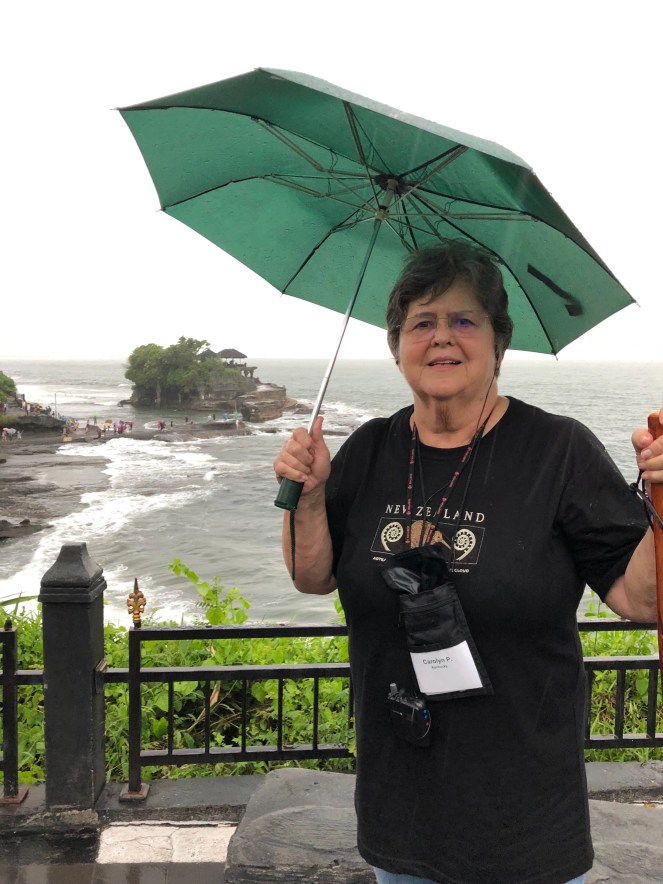
  • You may have heard about flash flooding in Indonesia. Several died in Papua, New Guinea. Bali, which is one of Indonesia’s 17,500 islands, had its own flooding issues. We came across a closed road on our way back to the ship after our special Indonesian dinner was cancelled due to delays we had all day with the rain. As you can see, I have an umbrella with the Hindu temple at Luhur Tanah Lot in the background. The tide occasionally allows visitors into the temple but not this visit. This is the most famous of the thousands of temples in Bali. Offerings are made daily in the homes of the eighty-five percent of Balinese who are Hindu, and we learned how to make them. Mine is the last photo. I was hesitant to make a Hindu offering, but as I made it, I offered it to my Lord Jesus and thanked him for the electric fan that ran over my head.

    Darwin and the Outback

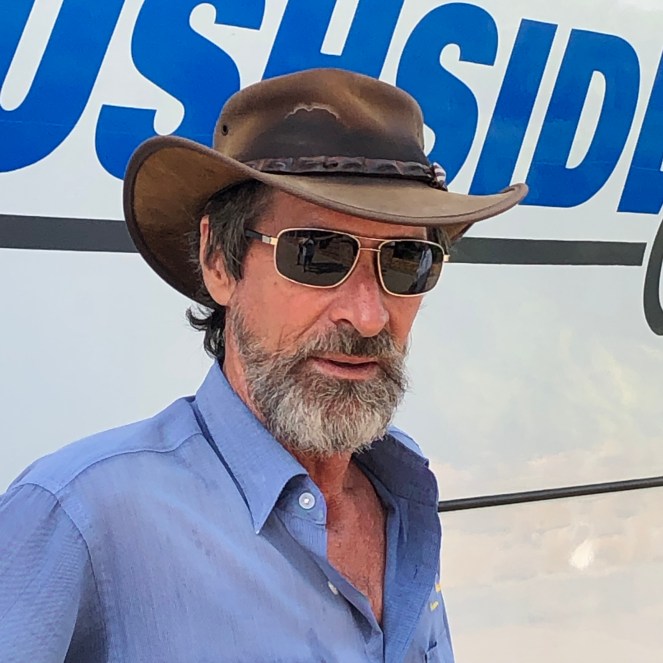
    We did not really visit the Outback yesterday. Bushie, our guide pictured here, says the Outback is anyplace outside of town. Our tours were all within the town of Darwin, but the second photo, taken in Charles Darwin National Park, does show what the savannah is like, more sparse trees with a very distinctive grass, certainly different from the rain forest and other coastal areas we have seen in Australia.

    Darwin is filled with remembrances of WW II, statues, memorial plaques, ammunition dumps, bunkers, parks, museums, and planters in the park shaped like anti-aircraft guns and pointed at the direction of the first air attack on the city. On February 19, 1942, the same Japanese squad that attacked Pearl Harbor attacked Darwin. The waterfront was destroyed as was much of the town. Hundreds of lives were lost. One memorial honors the Americans who perished on the USS Perry, which was sunk in the harbor but used its anti-aircraft guns until it was under water. I found myself thinking of Dad and his war time in Australia. I wrote a comment in the park saying how much my Dad spoke of Australia after he returned home.

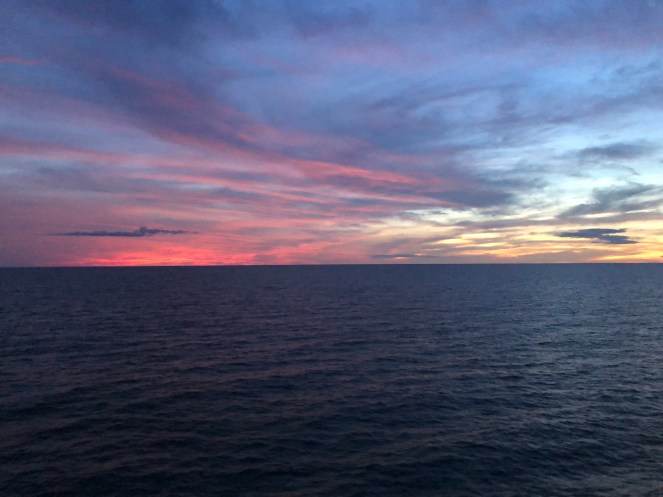
    Our last stop in Darwin visited the Royal Flying Doctor Service. This service, started by John Flynn as a mission to provide medical care to the stations and aboriginal people of the Outback, now serves someone every two minutes, over 300,000 visits a year. They have a staff of over 500 and are not government funded. They provide clinics and transportation for people who have to be in hospital. The museum there highlights the RFDS and also remembers the bombing of Darwin. Darwin sunset ends our time in Australia.